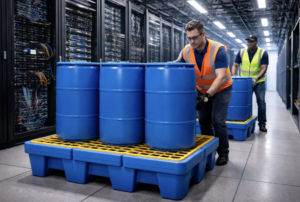
IT facility operations are often discussed in terms of servers, uptime, cooling, power, and cybersecurity, but the physical environment behind those systems matters just as much. A modern data center is a controlled facility built to support computer systems, storage, telecommunications, environmental controls, and physical security. As digital workloads keep expanding, the operational pressure on these environments continues to grow, with the International Energy Agency projecting that electricity supplied to data centres could rise from 460 TWh in 2024 to more than 1,000 TWh by 2030 in its base case. In that kind of high-stakes environment, even basic material-handling decisions deserve more attention than they usually get.
That is exactly why Drum Pallets matter in IT facility operations. They are not just warehouse accessories or industrial extras. In many IT environments, they play a practical role in helping teams manage fluids, protect floors, reduce spill risk, improve organization, and support cleaner, safer, more reliable operations. Whether a facility stores generator fuel additives, lubricants, cleaning chemicals, maintenance fluids, or support materials used in plant rooms and mechanical spaces, containment is part of operational discipline. When the mission is uninterrupted service, the details around storage and handling stop being small details.
The Hidden Physical Layer of IT Operations
When people think about IT operations, they often picture monitoring dashboards, racks of equipment, and alerting systems. What they do not always picture are the surrounding spaces that keep those systems functioning: generator yards, battery rooms, cooling infrastructure, maintenance closets, receiving areas, and back-of-house storage zones. These support areas may not look glamorous, but they influence readiness, response speed, safety, and reliability. Uptime Institute’s 2025 outage analysis says preventing outages remains a strategic priority for operators and notes that modern infrastructure complexity and evolving external threats continue to create operational risk.
That matters because IT facilities rarely operate in isolation from physical systems. Backup power equipment depends on fuel systems and maintenance practices. Cooling equipment depends on clean, well-managed mechanical environments. Facility staff need quick access to the right materials without creating clutter or spill exposure around critical pathways. A palletized containment strategy helps bring order to spaces that can otherwise become inconsistent over time, especially in facilities where operations run 24/7 and maintenance happens under pressure.
Spill Control Is Really Uptime Protection
In an IT facility, a leak is never just a housekeeping issue. A spilled drum in the wrong area can create slip hazards, contaminate surfaces, delay maintenance, affect adjacent equipment zones, or force staff to divert attention from core operational tasks. Even when the fluid itself is not directly touching IT hardware, the disruption it causes can still create real operational cost. The more essential the environment, the less tolerance there is for preventable disorder.
This is where containment becomes strategic. A good drum pallet helps keep containers elevated, organized, and positioned within a defined footprint. It gives operations teams a cleaner way to stage and manage liquids used for maintenance and facility support. Instead of treating fluid storage as an afterthought, the facility treats it as part of risk control. That shift in mindset is important because reliable IT environments are built not only by sophisticated software and redundant power design, but also by consistently reducing the chances of small physical failures turning into larger interruptions.
Compliance Is Part of Operations, Not Separate from It
For applicable facilities, fluid containment is also tied to regulatory expectations. The EPA states that facilities subject to Spill Prevention, Control, and Countermeasure requirements must provide containment or diversionary structures or equipment to prevent discharges, and it further explains that bulk storage container installations must provide secondary containment for the capacity of the largest single container plus freeboard for precipitation. That makes containment planning more than a convenience. It becomes part of responsible operations management. See the EPA’s guidance on secondary containment under SPCC.
For IT facility leaders, the value here is practical. Compliance issues create distractions, emergency purchases, cleanup costs, and unnecessary exposure. A cleaner, more intentional drum-storage setup helps reduce the chance of reactive decision-making during inspections, maintenance events, or emergencies. It also supports documentation, visual order, and repeatable procedures, which are all valuable in environments where consistency matters. The best operations teams do not separate safety, compliance, and uptime into different boxes. They treat them as connected parts of the same operating standard.
Cleaner Mechanical Spaces Support Better IT Performance
IT facility operations depend heavily on cooling performance and environmental control. ASHRAE’s data center resources emphasize standards and guidance around cooling, energy, humidity, and efficient operation for modern data centers. The U.S. Department of Energy’s Best Practices Guide for Energy-Efficient Data Center Design says effective data center design spans IT systems, environmental conditions, air management, cooling, and electrical systems, and it stresses that organizations should consider total cost of ownership and operational efficiency together.
That broader view matters because messy storage practices can work against environmental discipline. A facility cannot claim to be focused on thermal performance, clean maintenance access, and orderly infrastructure while leaving drums and fluid containers sitting wherever there is open floor space. Standardized containment helps keep mechanical rooms and support areas more structured. It improves visual management, supports better housekeeping, and makes it easier for technicians to move safely and work efficiently. Small operational improvements often compound in critical environments, and organized containment is one of those improvements. You can review ASHRAE’s data center resources for how strongly operations and environmental control are linked in mission-critical spaces.
Physical Risk and Cyber Risk Belong in the Same Conversation
A lot of IT leaders now understand that resilience is not purely digital. The NIST Cybersecurity Framework 2.0 is built around managing cybersecurity risk across organizations of all sizes and includes functions tied to governance, continuous monitoring, incident response, infrastructure resilience, and recovery. That framework may be cyber-focused, but the logic behind it applies directly to facility operations too: identify risk, reduce exposure, improve repeatability, and recover faster when something goes wrong.
That is also why physical infrastructure management belongs beside digital resilience planning. CISA’s critical infrastructure security and resilience resources are aimed at helping owners and operators reduce risk and strengthen essential systems. In practice, that means IT facilities should not ignore the physical details that make incidents more likely or recovery more difficult. A poorly managed storage area may seem minor until it slows access, creates an avoidable hazard, or contributes to downtime during a maintenance window. Strong operations come from reducing weak points before they become incident reports.
Standardization Saves Time When Time Matters Most
One of the biggest advantages of drum pallets in IT facility operations is standardization. They make it easier to assign locations, label contents, inspect conditions, and train staff on where materials belong. That matters during normal operations, but it matters even more during off-hours maintenance, emergency response, audits, and vendor visits. A standardized containment setup helps people act faster because the environment is easier to understand at a glance.
Standardization also supports scalability. As facilities grow, add equipment, expand cooling capacity, or handle more support materials, the cost of disorder rises. The IEA’s reporting on growing data centre electricity demand and Uptime Institute’s focus on rising operational complexity both point in the same direction: IT environments are becoming more demanding, not less. That means support practices need to mature alongside the technology stack. Storage discipline, containment planning, and physical organization are part of that maturity. You can see the broader demand context in the IEA’s Energy and AI analysis and the operational reliability angle in Uptime Institute’s Annual Outage Analysis 2025.
Conclusion
Drum pallets matter in IT facility operations because they support the part of reliability that is easy to overlook: the physical discipline behind digital performance. They help create cleaner support spaces, better spill readiness, stronger compliance posture, safer maintenance conditions, and a more organized operating environment. In facilities where uptime, safety, and efficiency are all under pressure, that is not a minor benefit. It is operational value.
The strongest IT facilities are not just advanced. They are well run. They treat every layer of risk seriously, from cyber governance and energy use to housekeeping and containment. Drum pallets fit into that bigger picture by helping operations teams stay ready, stay organized, and reduce preventable problems before they interfere with critical systems. That is why they deserve a place in the conversation whenever IT facility operations are being taken seriously.